Primates mainly the ones I'll be covering for this post, Lemurs (Prosimians/Strepsirhini), Spider Monkey (New World Monkey/Platyrrhini), Baboon (Old World Monkey/Cercopithecidae),Gibbon (Lesser ape/Hylobatidae), and Chimpanzee (Great ape/Hominidae) live in a wide range of habitats. They each adapt to live in those environments. Some have developed longer arms, stronger jaws, and even the use of crude tools. All this comes about in the search to satisfy the most basic of instincts, to feed.
The area in which which of these apes are found greatly influences their diet. For the most part primates have the base food source of fruit, nuts and plants. While some prefer to eat only those items many in times of scarcity or starvation will turn to eat wide range of items. These items include but are not limited to insects, small vertabrates, birds, eggs, smaller primates and in some cases such as the baboon will even consume large prey items such as goats or sheep. For example Lemurs which can be found exclusively on Madasgascar can and will eat bark and sap. The climate in this forest like most is very hot and humid. Only allowing certain times when a particular fruit or nut can be found.

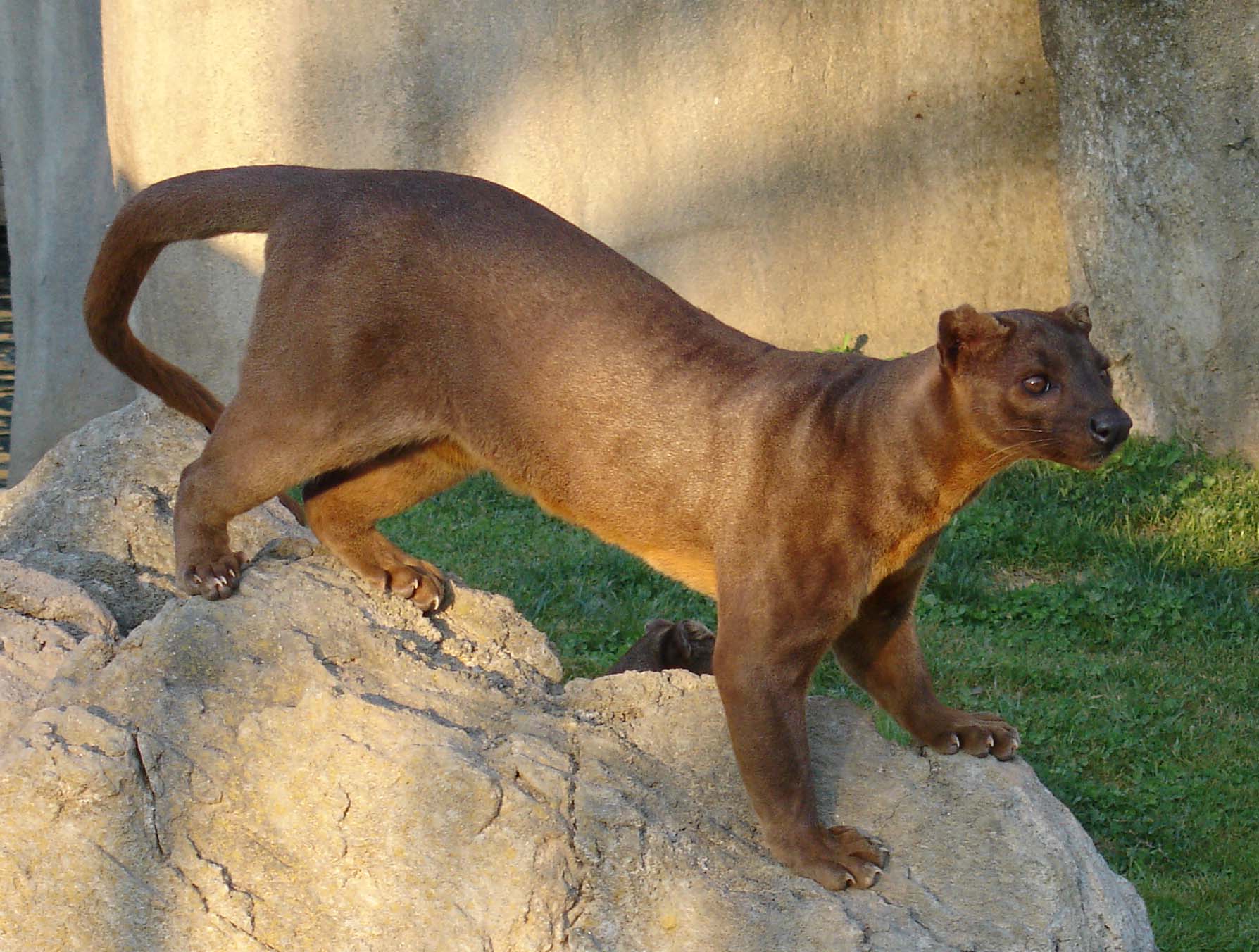
This lemur for example has decided to eat some leaves. Being fast both on the ground and in trees allows them to forage for insects and plants safely without the fear of being caught by predators. They move in bounding motion and quickly hop back into trees and away from danger. A luxury not all can afford. It also helps that being located on an island they do not have many natural predators aside from Fossa seen below.
Spider monkeys which are identified by their long dexterous arms live in forests which include high tree lines and the use of the long arms are suited perfectly for that life. Unlike lemurs spider monkeys spider almost all their time in the trees and being able to move fast is key specially since they prone to stay in the canopy where trees are spread further apart.The arms also help them gather insects and fruits from normally out of reach branches.

Baboons which are considerably the most aggressive looking primate on the list are found in Africa. Which also happens to be inhabited by large predators such as lions and hyenas. The development of the those long canines serve a more defensive purpose. It enables the baboon to scare off most that would them an easy meal. This doesn't mean the Baboon uses them purely for that purpose. The long teeth also help it eat a more diverse prey item like antelopes and herd animals. Compared to the other four these prey items are by far the most out of the way.

Gibbons which considered the fastest primates when it comes to locomotion prey on a majority of the smaller food items found in the primate species. However their speed allows them catch tougher items such as birds. This is due to the unique joint in their wrist which continuously dislocates and relocates with each swing.


I think that the post was very informative on each individual species. I found it interesting how the baboons can consume large prey such as goats. It seems that each species has their own way of adapting to their surroundings. This is why they all consume different prey, live differently and get around differently as well. I liked the images you provided along with the post.
ReplyDeleteThank you very much! I was a bit stumped a first because most of their diets were comprised of the same things. I tried to focus on the unique item in their diet in hope to keep the blog from going stagnant.
DeleteI as well found the baboons the most interesting. I always thought the canine teeth were strictly for their preffered prey but it turns out its just for display.
Quick clarification: You refer to lemurs as apes, but they are actually prosimians. The spider monkey and baboon are both monkeys and the gibbon and chimpanzee are apes (lesser and great).
ReplyDeleteGood discussion on the lemur diet. There is a great diversity in lemurs and they tend to have diets to match.
One thing I am finding with this trait of diet is an assumption being made by students regarding the arboreality of these primates, kind of a "they live in the trees so they eat what's in the trees. But why do they live in the trees? It is an interesting question of causality. Did primates move into the trees because they were going for the food availability there? Or did they move into the trees for another reason, such as predation, and adapted to the available food? This is important because there is a whole world of available food below the forest canopy that these primates are not utilizing. It is worth asking "why not"?
So when you consider the diet of these primates, recognize that they are not taking advantage of all of their environment in some cases. The spider monkey, for instance, essentially never leaves the trees. That limits them to what is available in the trees.
While I appreciate the detail on the baboon's dangerous environment and how their canines are related to this problem, more information on the baboon's diet (which is incredibly diverse) was needed for this section. Can you use the baboon's environment to explain why baboons seem to be able to eat whatever they come across?
Interesting discussion on the gibbon and good connection with their shoulder joint, but meat is not a very common staple for gibbons. They are nearly entirely arboreal, like the spider monkey, probably for reasons of predation, which has limited their diet to what is found in the canopy, predominantly fruit, leaves, flowers, and seeds.
Missing the section on chimpanzees and the final summary?