Solar radiation or sunlight is electromagnetic radiation given off by sun. It comes in the spectrums of Infrared, Ultraviolet, and visible light. Ultraviolet being the type that is harmful to humans as it is not fully absorbed by the ozone layer. There many sub types of Ultraviolet or UV light but the commonly known to the public are Ultraviolet A (UVA) and Ultraviolet B (UVB). UVB has been known to cause sunburns and eye (cornea) damage but prolonged exposure can cause cancer, particularly of the skin called Melanoma. UVA while harmful has a lesser chance of causing harmful effects. Ultraviolet can also cause damage to our DNA and RNA. The effects of sun exposure can be seen below.

Eye damage resulting from UV exposure can sometimes result in a condition referred to as snow blindness or welder's flash. It is a result of a sunburn on the cornea and other damaged areas.
Defense from both UVA and UVB rays comes in a variety of forms, as humans have become relatively good at negating the it's harmful effects.
A falculative-term adaptation to this problem comes in the form of tanning. As we lack the protection most animals have from the heat/radiation effects, our skin has developed a quick interesting method to protect itself. The skin will produce melanin a chemical which causes us to tan meaning our skin darkens. With this defense we are able to effectively decrease the amount of UV that our skin absorbs. The tan will exist so long as the UV exposure is present, eventually the tanned skin is pushed to the top layer and peels off, resulting in only a temporary solution. This process also varies from person to person. Individuals with darker skin don't need to tan, and people with lighter skin may not tan effectively and get sunburned.

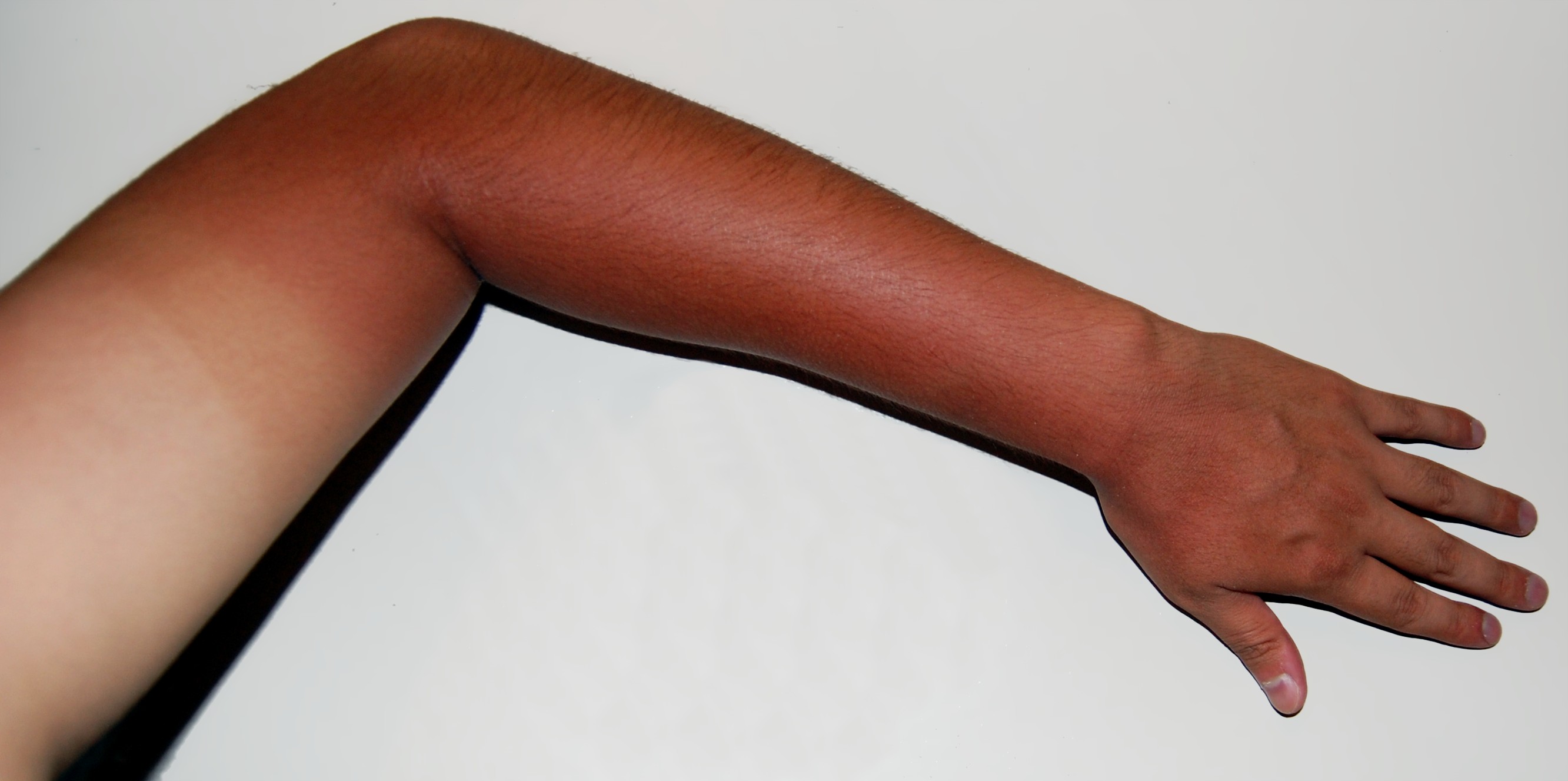
While this image on the left is an example of the difference in tanned skin, it also shows the limitless nature of human creativity.
The developmental aspect of UV protection will be familiar to those in this class. Which is the ability to walk upright or be bipedal. Without the former protection of fur that our ancestors once had our skin is more exposed to the harmful UV rays (which was
given up to help us better regulate our body temperatures combined with sweating). In essence walking upright limits the amount of surface that is exposed to the sun thus protecting vital parts of the body from harm. This process as we learned took millions of years but our modern form of locomotion is a result of combined evolutionary traits.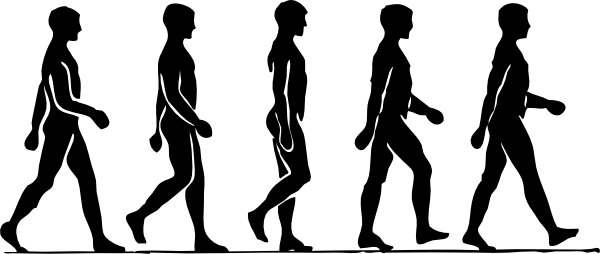
Interestingly it would seem the best method to decrease UV exposure would be to wear concealing clothes, however our culture has gone in the opposite direction in response to the heat emitted and for the sake of being attractive. However we still remedy this problem through the use of sun block or sun screen. It can come in spray or lotion form and when applied decreases the amount of UV absorbed by the skin. Even though the purpose is to protect our skin each lotion is different and may only protect against UVA rays and not UVB. Thus the labels of full spectrum and broad spectrum and the SPF factor.

The importance of studying these aspects can help further our understanding to better protect us and help develop better forms of defense. Each environment has different methods as the varying level of ozone and sun exposure varies as well. It provides a perfect opportunity to study the varying effects under different conditions.
Within each race is also a difference in culture. For example the humans who reside in the arctic have darker skin tone, but with limited sun exposure why and how do they cope with this? Africans also have darker skin but are exposed to much more sun. Simply studying it from a racial aspect would not yield adequate results. Although when we look at it from an environmental perspective we see that the arctic people have darker skin in response to reflection of UV/Sunlight on the ice. Race also is so varied it is almost sometimes impossible to tell the race of a specific person.
